Qualified Invoice · Odoo 19 · Japan

Japan qualified invoice for Odoo 19: verify suppliers and measure the 2026 credit cliff

Since October 2023 Japan runs the qualified invoice system: to claim an input consumption tax credit, your supplier must be a registered invoice issuer. For unregistered suppliers, transitional relief lets you credit 80% of the input tax through September 2026, then only 50% from October 2026. That step down is the credit cliff. This Odoo 19 module verifies which suppliers are registered, flags the affected vendor bills and quantifies the credit you are about to lose in 2026, so you know your exposure before it hits your books.

Validates the T-numberTells registered qualified issuers apart from unregistered suppliers in Odoo.
Quantifies the credit cliffCalculates the credit you lose when relief drops from 80% to 50% in 2026.
On your real purchasesWorks on the vendor bills you already have in Odoo, not a spreadsheet.
Native to Odoo 17-19Inside the ERP, with no separate SaaS and no extra tool to maintain.

Japan qualified invoice supplier verification and 2026 credit cliff inside Odoo 19
Credit cliff inside the ERPSuppliers, affected bills and credit at risk in the same purchasing system.
Source code included (OPL-1) · Odoo 17 / 18 / 19 · One-time payment 49 EUR · Direct support from the developer · No SaaS, no middleware

Real module screenshots

The very screens you get in Odoo, the real thing.

Japan qualified invoice Odoo 19 screenshot 1: supplier registration validation Japan qualified invoice Odoo 19 screenshot 3: QII badges on vendor bills Japan qualified invoice Odoo 19 screenshot 4: credit cliff exposure dashboard Japan qualified invoice Odoo 19 screenshot 5: bulk validation wizard and audit log

Try the Japan qualified invoice module inside a real Odoo 19, no sign-up. User demo / flexigodemo.

Try the live demo View on the App Store

The problem with the qualified invoice system

The qualified invoice system changed the rule: holding the supplier's invoice is no longer enough, the supplier must be a registered issuer. And the transitional relief that cushioned unregistered suppliers shrinks in 2026. Working out how much that loss adds up to is anything but trivial by hand.

You don't know which suppliers are registered

Some suppliers have a qualified issuer registration number and some don't. Without control inside the ERP, it is hard to know which part of your purchases earns full input consumption tax credit and which part doesn't.

The 2026 step is easy to miss

The credit on unregistered suppliers drops from 80% to 50% in October 2026. If nobody quantifies that jump, you discover the cost only once you are already paying it, not while you can still react.

Doing it by hand every close is slow

Cross-referencing bills, each supplier's registration status and the applicable rate in a spreadsheet is tedious and error-prone. And you have to redo it every period.

What the module does inside Odoo

It doesn't file for you and doesn't replace your tax accountant in Japan. It does the concrete, useful part: it validates your suppliers' registration status, flags the affected bills and puts a number on the 2026 credit cliff across your real purchases.

Supplier T-number tracking and validation

Stores each supplier's official registration number (T-number) on their Odoo contact and validates their qualified issuer status, one by one or in bulk.

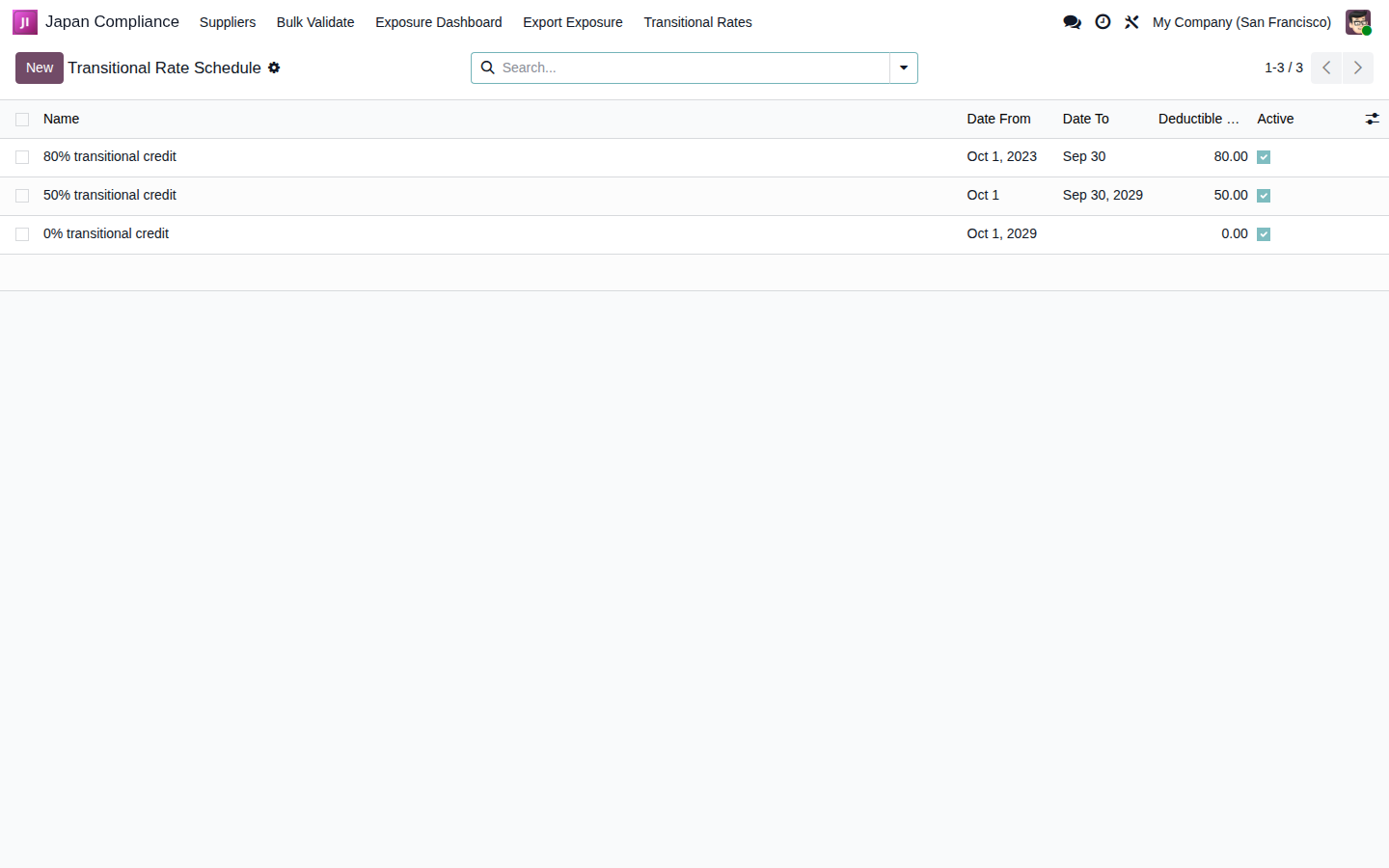
Transitional rate engine (80/50/0)

Automatically applies the correct credit rate (80%, 50% or 0%) based on the bill date and the supplier's registration status, no manual lookup per invoice.

QII status badges on vendor bills

A real-time compliance signal on every bill: the supplier's validation status and the applicable credit rate, right there without leaving the document.

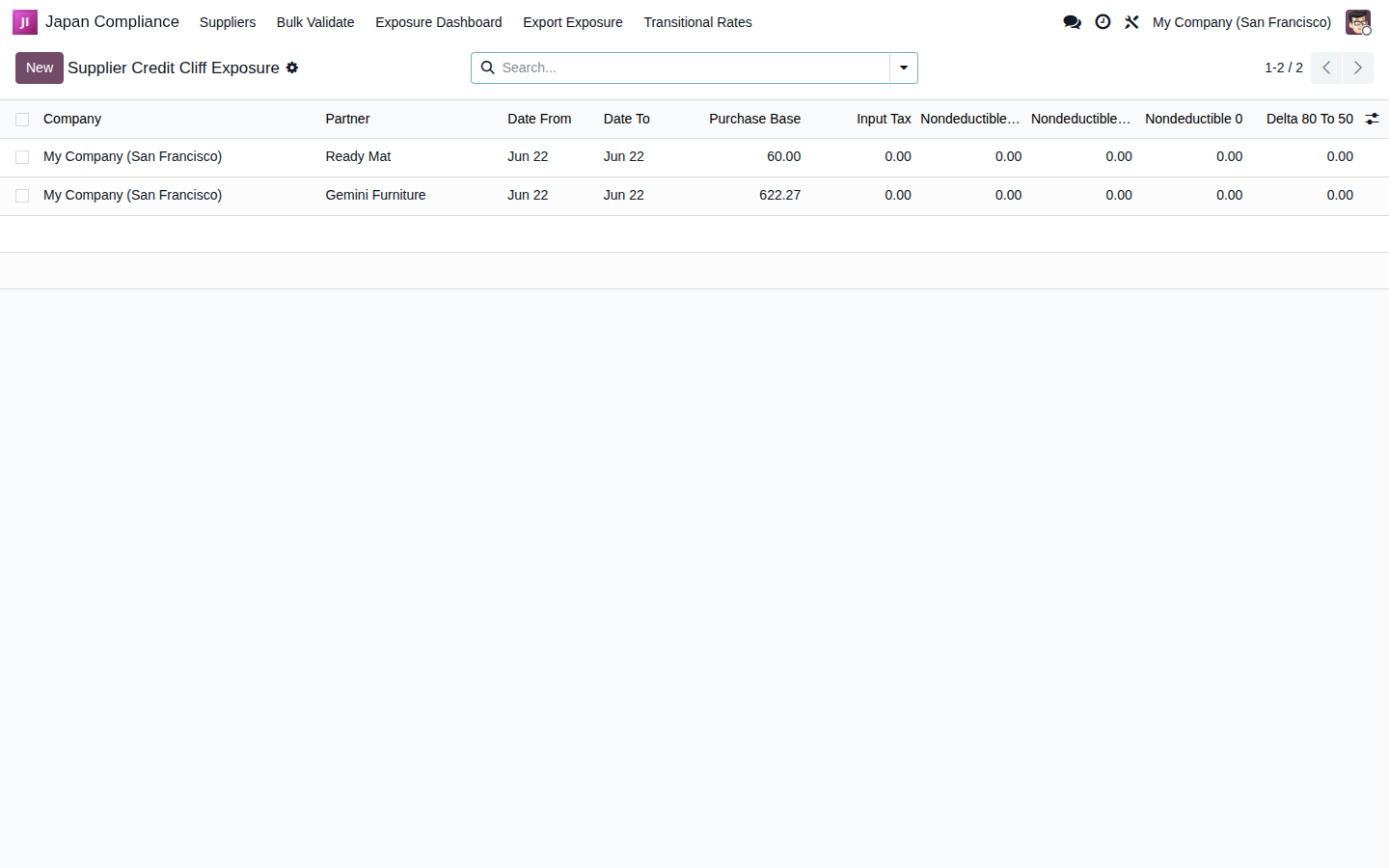
Exposure dashboard with time series

Visualizes the input consumption tax credit at risk before and after the October 2026 step, with drill-down by supplier and by period.

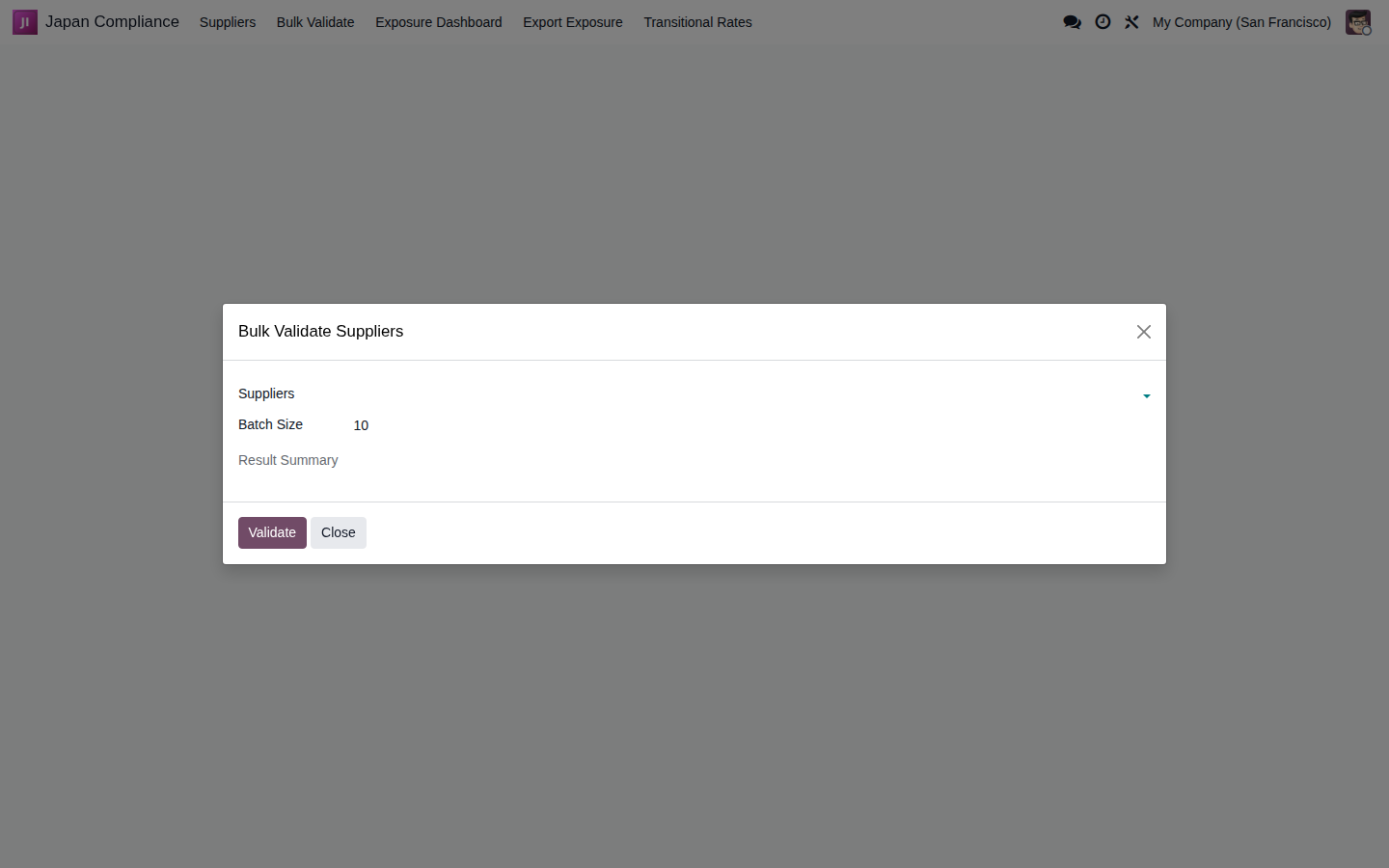
Bulk validation wizard

Validates many suppliers in a single operation, with an audit trail behind every validation so nothing happens off the record.

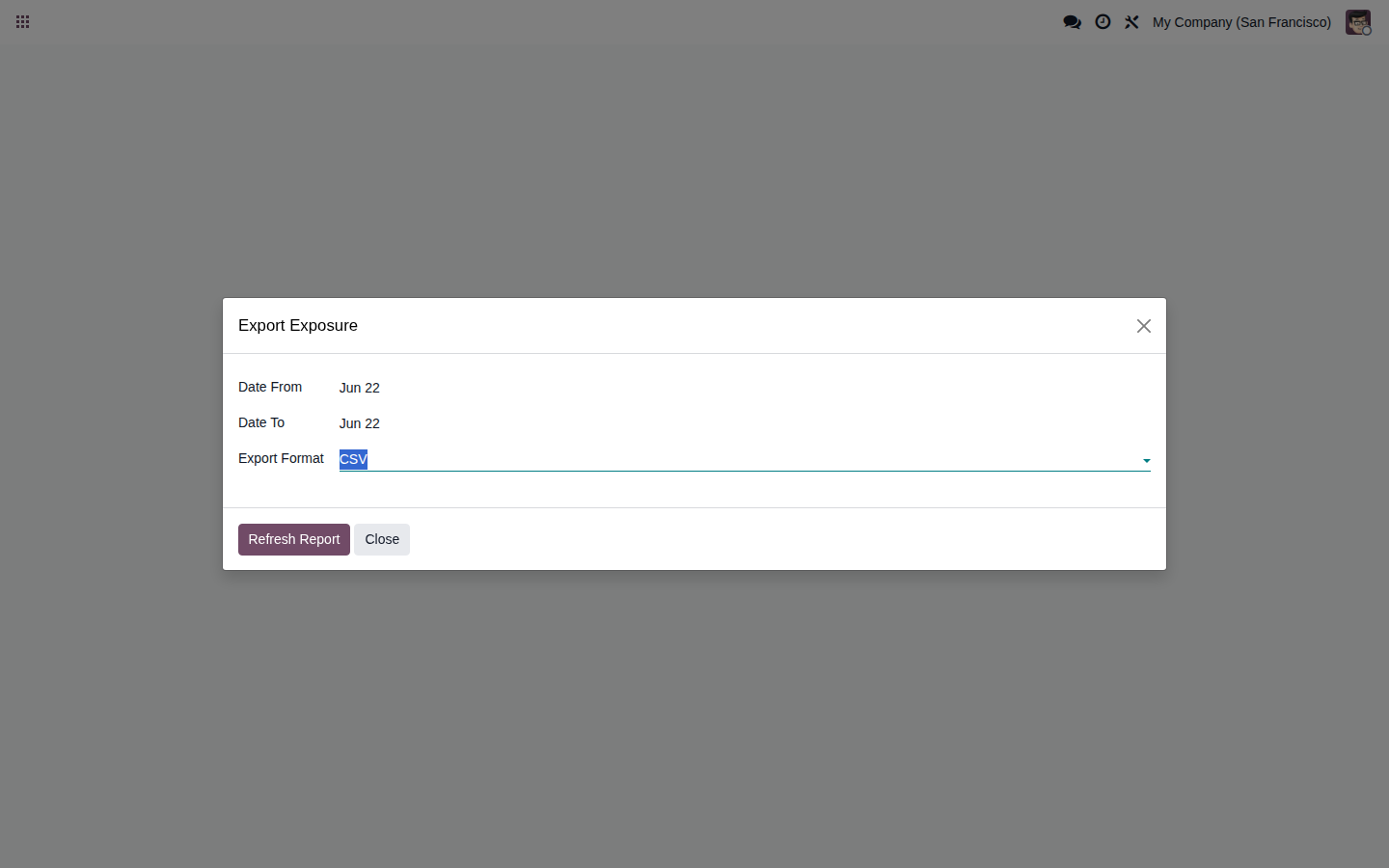
Exportable audit logs (CSV/PDF)

Every validation and credit calculation is logged with timestamp, user and source, and exports to CSV or PDF for your accountant or auditor.

Multi-company ready

Company-scoped consumption tax settings and record rules, built for holdings and groups with more than one entity in Japan.

Email alerts and scheduled monitoring

A scheduled cron watches your suppliers' status automatically and emails you when something changes or the cliff draws closer.

From vendor list to quantified exposure in three steps

You install it in your own Odoo and work from the data you already have. No migration, no separate platform.

1. Record the T-number

Add each supplier's registration number on their Odoo contact, then validate their qualified issuer status one by one or in bulk with the wizard.

2. The rate engine takes over

On every vendor bill, the module applies the correct 80/50/0 credit rate from the bill date and supplier status, and shows a QII badge so the state is obvious.

3. Read your exposure

The dashboard shows the consumption tax credit at risk before and after October 2026, broken down by supplier and period, with logs you can export for your accountant.

49 EUR, one time, source code included

No subscription, no SaaS fee, no middleware. You buy it once on the Odoo App Store, install it in your own Odoo and it is yours.

One-time payment of 49 EUR

A single purchase on the Odoo App Store. No recurring charges, ever.

Source code included (OPL-1)

You get the full source under the Odoo Proprietary License. Read it, audit it, adapt it to your setup.

Odoo 17, 18 and 19

Runs on Community and Enterprise across the three supported series, so you are covered whether you upgrade now or later.

Direct support from the developer

When you have a question, you reach the person who wrote the code, not a ticket queue. Configuration help available if you need it.

The person who builds the module is the one who answers you

FlexigoTech is Flexibles y Accesorios Gobe, S.L., based in Barcelona. Development is handled by a single developer, so when you ask something about Japan's qualified invoice or the credit cliff calculation you talk directly to the person who wrote the code, not to a salesperson or a first-line support desk forwarding tickets.

17-19native Odoo
BCNlocal development
0separate SaaS

What it does and what it doesn't

This is a native Odoo module, with no external platform to maintain and no extra SaaS fee. We don't invent reviews or customer stories: the tool validates your suppliers' registration status, flags the affected bills and quantifies the 2026 credit cliff. It doesn't file consumption tax returns and doesn't replace your tax accountant in Japan, and we tell you that before you buy, not after.

Try the live demoAsk a question

If the qualified invoice brought you here, this matters too

Japan's qualified invoice rarely travels alone. It usually shows up together with the need to organize purchasing, taxes and compliance inside a single Odoo.

Questions that usually come up with Japan's qualified invoice

What is Japan's qualified invoice system and why does the 2026 credit cliff matter?

Since October 2023, Japan's qualified invoice system (the invoice retention method) requires that, to claim an input consumption tax credit, your supplier be a registered invoice issuer with a registration number. For purchases from unregistered suppliers there is a transitional relief: 80% of the input tax was creditable through September 2026, dropping to 50% from October 2026. That step down is the credit cliff: from that date you lose more credit on every unregistered vendor.

What exactly does the module validate about my suppliers?

The module records each vendor's official registration number (T-number) on their Odoo contact and flags which suppliers are registered qualified issuers and which are not, marking the affected bills. You see at a glance which part of your purchases earns full input consumption tax credit and which part falls under the transitional relief that shrinks in 2026.

Does the module file consumption tax returns with the Japanese tax authority?

No. The module works inside Odoo: it validates your suppliers' registration status and quantifies the credit you lose at the 2026 step. It does not file returns and does not replace your tax accountant in Japan. It gives you clean, organized figures so you can decide and your accountant can work from clear numbers.

Does it work with Odoo Community?

Yes. It runs on both Odoo Community and Enterprise, and supports Odoo 17, 18 and 19. It builds on the standard Accounting/Invoicing app, so vendor bills and contacts work exactly as you already know them, with the qualified invoice logic layered on top.

How much does it cost and are there recurring fees?

It is a one-time payment of 49 EUR on the Odoo App Store, source code included under OPL-1. No subscription, no SaaS fee and no middleware. You install it in your own Odoo, and you get direct support from the developer who wrote it.

Can I try it before buying?

Yes. There is a live demo, a real Odoo 19 with the module installed and no sign-up (user demo, password flexigodemo), where you can see supplier validation and the 2026 credit cliff calculation. Once you are sure, you buy the license on the Odoo App Store, and if you need it we help you configure it and get the first calculation right.

In October 2026 the credit on unregistered suppliers drops from 80% to 50%.

The question is whether you discover that cost when it arrives or have it quantified beforehand inside Odoo. Tell us how you buy in Japan and we'll tell you straight whether the module fits.

Try the live demoView on the App Store · +34 639 913 105