
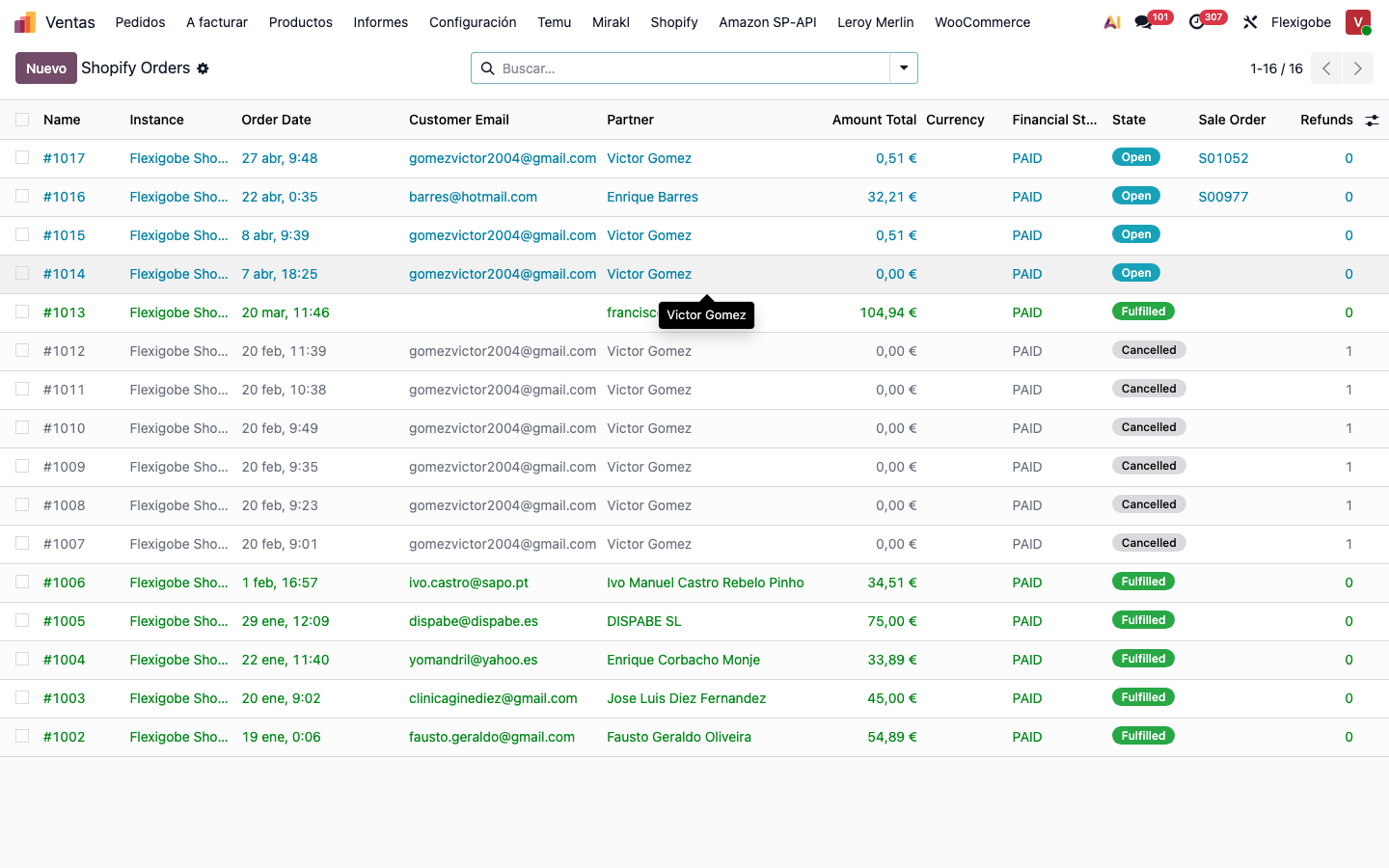
Shopify sells well as a storefront. Odoo runs well as an ERP. The trouble starts once the business grows and the two systems stop talking to each other with any precision.
Short answer: a Shopify Odoo connector can't just “pull down orders”. It needs to hold up variants, stock, fulfillment, tracking and operational consistency across the store, the warehouse and invoicing.
What a serious ecommerce operation expects from this integration
- Correct orders in Odoo with customer, lines and taxes.
- Stock by SKU and variant with no differences across channels.
- Tracking pushed back to Shopify automatically.
- Customers and addresses without pointless duplicates.
- A solid base for handling returns, cancellations and refunds.
The weak spot is almost always variants
When Shopify and Odoo don't share the variant model properly, the usual suspects show up: duplicate SKUs, badly linked products, stock that's published wrong, and orders that arrive with inconsistent references.
That's why a good integration starts with the master data, not the webhook.
Orders, stock and tracking: the triangle that matters most
If your team fulfills shipments in Odoo, then Odoo needs to reserve stock, close out the logistics flow, and push tracking back to Shopify without a manual click on every single order.
When this fails, the cost isn't technical: it turns into more support tickets, more delays and more time lost per operation.
Common mistakes in Shopify + Odoo
- Mapping products without a clear variant and SKU strategy.
- Syncing total stock instead of publishable stock.
- Repeated webhooks and duplicate orders.
- Tracking that stays in Odoo and never reaches the store.
- Returns handled outside the main flow.
When it's worth putting it in place
Mainly once Shopify stops being just a small storefront and starts coexisting with a real warehouse, invoicing, replenishment, more than one sales channel, or more than one carrier.
Useful links within FlexigoTech
Frequently asked questions
Can Shopify and Odoo share stock by variant?
Yes, but it requires correct bindings between variants, SKUs and publishable-stock rules.
Should tracking flow back to Shopify?
Yes. If the order is fulfilled in Odoo, the status and tracking number should flow back to Shopify automatically.
Can orders, customers and products all be synced?
Yes, though it's not always best to start with everything at once. Many rollouts begin with orders and stock.
What usually breaks a Shopify Odoo integration?
Badly mapped variants, duplicate SKUs, repeated webhooks, and the lack of clear rules for stock and returns.
Want us to review your Shopify + Odoo case?
We look at your catalog, variants, stock and logistics flow to tell you whether you need the license, implementation, or both.